From Gemini:
You’re spot on. That 385 hp figure isn't a typo or a different trim—it’s actually a very recent mid-year production change for the 2026 model.
While your **2025 Ford Explorer ST** is rated at the familiar **400 hp**, Ford has officially revised the output for the 2026 model year depending on when the vehicle was manufactured.
### 2025 vs. 2026 Horsepower Breakdown
The performance specs for the 3.0L EcoBoost V6 now depend on the vehicle's build date:
| Model Year / Build Date | Horsepower | Torque |
| :--- | :--- | :--- |
| **2025 Model (All)** | **400 hp** @ 5,500 RPM | 415 lb-ft @ 3,500 RPM |
| **2026 (Built before April 13, 2026)** | **400 hp** @ 5,500 RPM | 415 lb-ft @ 3,500 RPM |
| **2026 (Built on/after April 13, 2026)** | **385 hp** @ 5,500 RPM | 415 lb-ft @ 3,500 RPM |
### Why the Change?
This 15 hp drop is primarily due to updated emissions hardware. To comply with tightening EPA and CARB standards (which are moving toward 2027 requirements), Ford has begun integrating **Gasoline Particulate Filters (GPF)** into their EcoBoost engines.
Similar changes were recently seen in the 2026 F-150's 3.5L EcoBoost engine. These filters help reduce soot emissions but create slightly more exhaust backpressure, which often requires a software recalibration that results in a lower peak horsepower rating.
### Key Takeaways for ST Owners:
* **Torque is Unchanged:** The 415 lb-ft of torque remains the same across all versions. Since torque is what you "feel" during low-end acceleration and towing, the real-world driving experience shouldn't feel significantly different.
* **Affects Multiple Trims:** This change isn't exclusive to the ST; it also applies to the **Platinum** and the new **Tremor** trim when equipped with the 3.0L V6.
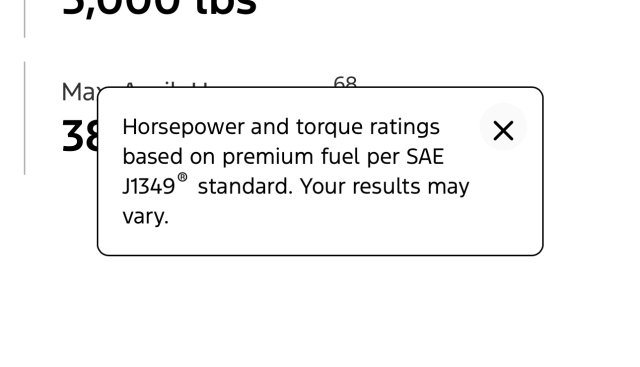
* **Fuel Requirement:** These ratings are still typically achieved using **Premium Fuel**. Using regular gas will likely result in a further reduction in performance as the ECU pulls timing to prevent knock.